
2021–Present
CFH Garden Project
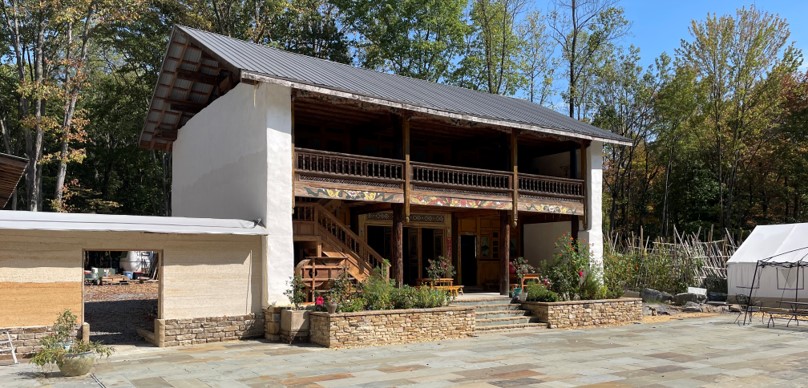
The China Folk House (CFH) is a 501(c)(3) nonprofit organization dedicated to creating a space for experiential learning and training that involves the depth of faith, through the preservation of heritage beauty, cross-historical cultural exchange, and environmental integration and community co-creation.
CFH dismantled and rebuilt a traditional mortise-and-tenon house in the United States from Cizhong, Yunnan, China, where the Tibetan, Bai, and Naxi ethnic groups are integrated. The relocation was due to the construction of a hydroelectric dam on the upper reaches of the Nu River, which submerged the site. CFH documented the house’s structure and surrounding landscape, dismantled and transported it, and plans to reconstruct it exactly as it was in the Friends Wilderness Center forest on the banks of the Shenandoah River in Jefferson County, West Virginia. CFH aims to transform this traditional dwelling into an experiential learning and training museum that respects history and emphasizes humanistic experiences.
CFH is more than just a cultural project, nor is it solely about showcasing traditional Chinese architectural techniques and aesthetics.
This building bears the memory of an ordinary family and community through the vicissitudes of history: the arrival of French Catholic missionaries, the arrival of American fighter pilots during World War II, and the shockwaves of the Cultural Revolution. Ultimately, the building escaped permanent submergence due to dam construction and made its way across the ocean to this very spot. We look forward to the CFH team uncovering the historical truth and telling the American people a true, multifaceted, and vivid people-to-people story.
Since the end of 2021, the Bedrock Foundation and the Dao Feng and Angela Foundation have jointly launched a three-year funding program for CFH’s Garden project. The total project grant is $310,114. Bedrock Foundation provided $130,000.
The two foundations are willing to support the CFH Garden because it is impossible to understand contemporary China without understanding the historical transformation of rural China. The funding was to support CFH in completing the courtyard and garden – an integral part of every rural Chinese family – and to explain to visitors the role of the main house, courtyard, and garden in China’s intensive agriculture, Yunnan’s rich biodiversity, and the history of European plant hunters, and the Chinese perspective on the natural world.
By the end of 2026, CFH will have completed the courtyard and established two specific types of gardens: an ethno-botanical garden and a substantial vegetable garden with written interpretive guides.